Cajón and Percussion: the Box That Plays Itself Into Every Jam
🇩🇪 Auf Deutsch lesen~4 min read
cajonpercussionrhythminstrumentmusic
Part 2 of the electric guitar series: the CAGED system as fretboard geometry — five shapes, chord tones, extensions, and the pentatonic overlay that turns shapes into solos.
Percussion is the honest part of music: no pitch to hide behind, only time. The cajón is my entry drug — a plywood box you sit on, with a full rhythm section hiding in its front face.
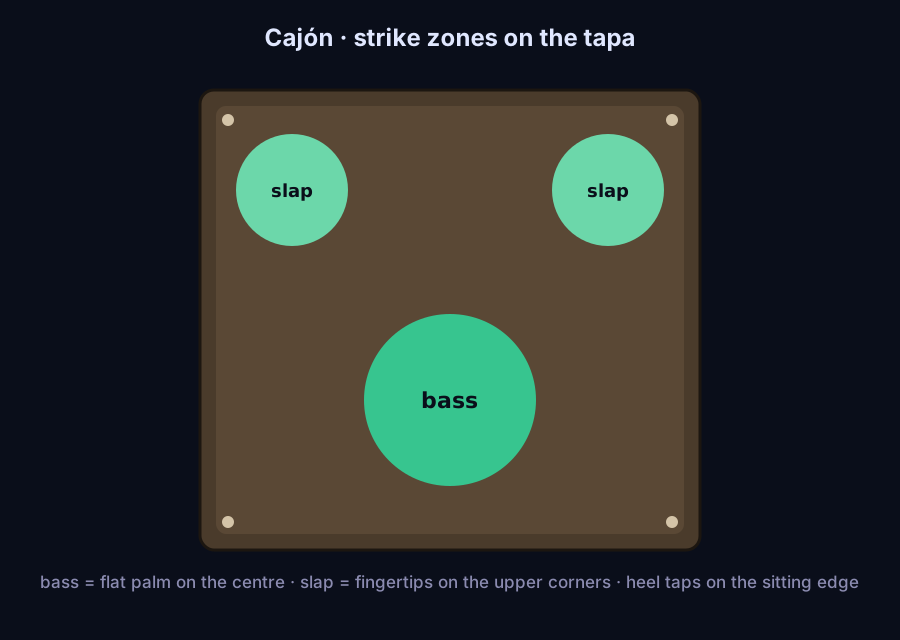 Cajon front face with strike zones: bass zone in the centre, slap zones at the upper corners, heel taps on the sitting edge
Everything on the cajón is a mix of two strokes:
Between them: heel taps on the sitting edge for sixteenth-note ticks, and the flam (bass + slap together) for accents. All four, one after another:
Sit down and play a drum kit's job:
count:   1   2   3   4
hands:   B   S   B   S     (B = bass, S = slap)
That boom-bap grid is a full groove — add ghost slaps between the beats and it becomes backbeat-land:
The 6/8 feel is where the instrument shows its Afro-Peruvian age — bass on one, slaps on two and three, ghost at the end of the bar:
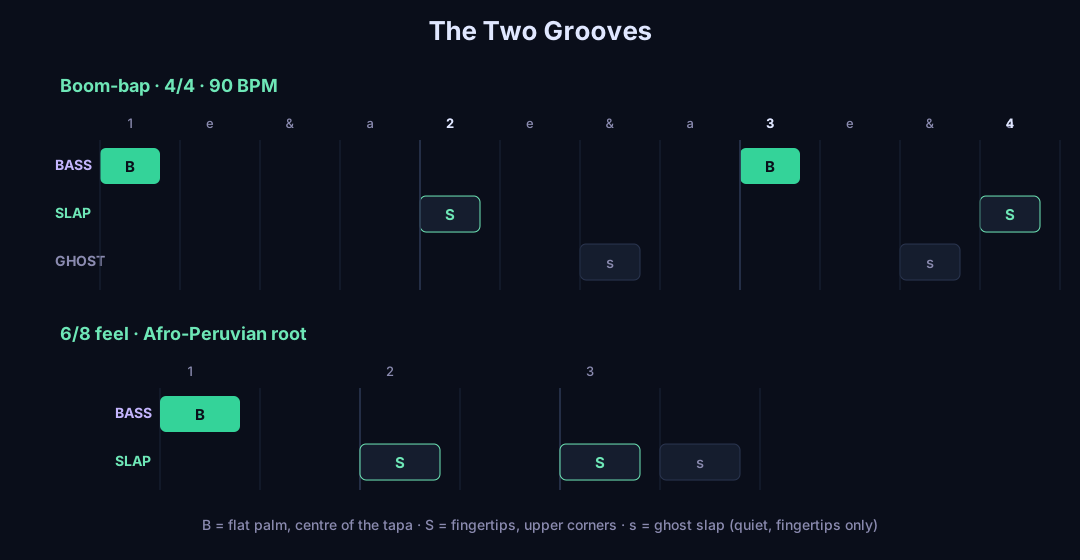 Cajon rhythm grid: boom-bap 4/4 pattern and the 6/8 variation, mapped as step grids for bass, slap and ghost slaps
From there, one step at a time: sixteenth-note slap fills, playing quietly — which is the hard part, and the same discipline as muting a 5-string bass.
The cajón is played with the whole body, so the body is part of the setup:
If the bass sounds thin, it is almost never the box — it is the palm angle. Full hand, fingers together, strike through the centre, wrist loose.
Rules that keep you invited back:
Pair it with the Launchpad for the electronic half and you have a one-person rhythm section. The same anchors-then-fills logic carries straight over to finger drumming on the guitar series' practice approach — measure, adjust one variable, listen.
It doubles as a chair, survives a rehearsal room, and teaches the one skill every other instrument in my setup silently depends on: keeping steady time with your body instead of a click. Back to the music section.
Is a cajón good for complete beginners? Yes — it is the most forgiving percussion instrument there is. You already sit the way the instrument wants, the two basic sounds are found in minutes, and a usable groove is realistic in the first session. Timing discipline is the long game, not the sounds.
What is the difference between cajón bass and slap? Bass is the flat palm on the centre of the front plate, which flexes and gives a low thud. Slap is fingertips on the upper corners where the plate is stiff, giving a dry crack. Everything else on the instrument is a blend of the two.
What rhythm should I learn first on cajón? Boom-bap: bass on beats 1 and 3, slap on 2 and 4. It is a drum kit's job in two hands, works at almost any tempo, and ghost slaps on the off-beats turn it into a backbeat groove.
Can a cajón keep up with an acoustic guitar? Yes, at low-to-medium volume. Sit slightly angled toward the guitarist, keep the slap relaxed rather than loud, and treat the bass hand as the kick drum — it carries the groove so strumming can breathe.