Harmonica: Blow, Draw, and Bends on a Diatonic Harp
🇩🇪 Auf Deutsch lesen~4 min read
harmonicadiatonicbluesinstrumentmusic
Part 2 of the electric guitar series: the CAGED system as fretboard geometry — five shapes, chord tones, extensions, and the pentatonic overlay that turns shapes into solos.
The diatonic harmonica is the cheapest complete instrument I own and the hardest to play well. Ten holes, twenty reeds, and a blues vocabulary you can carry in a jeans pocket — always in the bag next to the Launchpad.
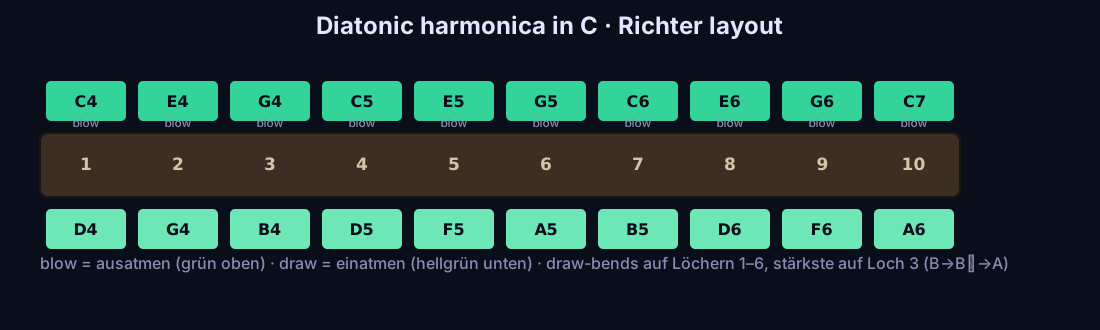 Diatonic C harmonica note layout: blow notes above, draw notes below, all ten holes in Richter tuning
The Richter layout looks random and is completely systematic:
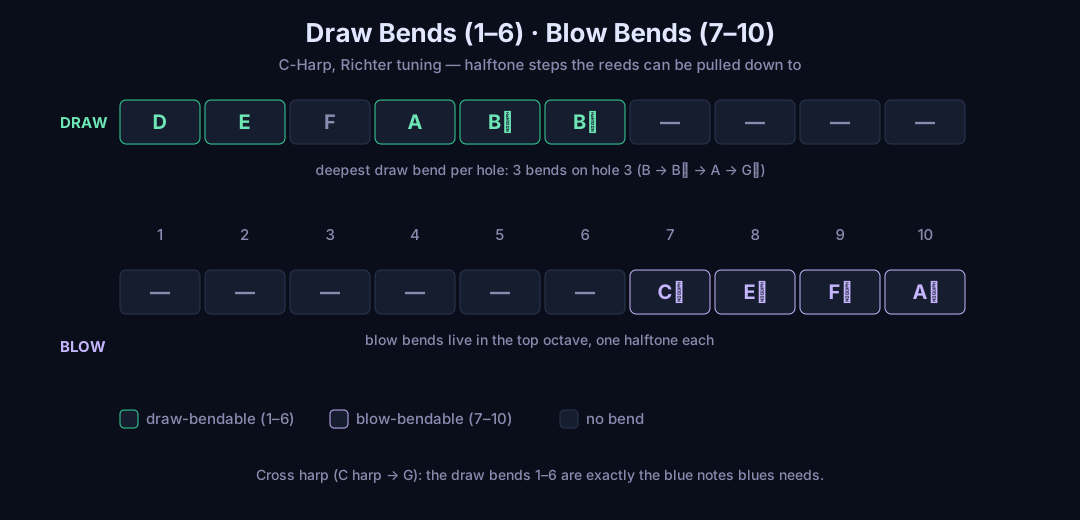 Harmonica bend map: which holes bend on draw (1-6) and blow (7-10) on a C diatonic harp, with the deepest bend per hole
The bend itself is slow at first — a controlled sag from B down to B♭ and back on hole 3, then the full pull to A:
Everything else depends on this. Two schools:
Test: blow hole 4. If you hear two notes, you are leaking into hole 3 or 5. Tilt the harp slightly up into the lower lip; that alone fixes most leaks.
Tab for harmonica is hole numbers: 4B means blow hole 4, 4D draw, an
apostrophe bends down (3D' = B→B♭ on hole 3). A first cross-harp chug:
4D 4D 3D' 4B | 4D 3D' 4B 4D
Practice slow with a drum loop — same rule as everywhere: percussion first, notes second.
Fifteen minutes, three blocks — the same discipline that keeps the guitar series honest:
3D 3D 4B 4D looped).It is loud enough for a street, quiet enough for a flat at midnight, and it forces breath control like no other instrument. For the tonal side — why the same physical note works over different chords — see Music Theory Fundamentals for Producers. Back to the music section.
What harmonica key should a beginner start with? A C diatonic harp. It is the reference key for almost every tutorial and tab, sits in the middle of the range so bends are easiest to learn, and in cross harp it plays blues in G.
What is cross harp (second position)? Playing a C harmonica in the key of G by treating the draw notes as home. The draw chord on holes 1–4 is a G7 shape, so the blues vocabulary of the instrument lines up with the dominant sound of the new key.
How do draw bends work? The tongue reshapes the vocal tract and lowers the air pressure under the higher-pitched reed of the hole, pulling its pitch down by up to three semitones. Holes 1–6 bend on draw, holes 7–10 bend on blow.
How long until I can play a first blues riff? A clean single note takes a few days of practice; a first cross-harp chug pattern is realistic within two weeks of 15-minute daily sessions. Bends take months — they are a technique, not a trick.